
Finding a Spinal Stenosis Specialist in Central Texas
- ReleviiMed

- 2 days ago
- 11 min read
Leg heaviness, numbness, or pain that worsens when you stand or walk can make ordinary routines feel uncertain. These symptoms may have several possible causes. So choosing the right clinician starts with understanding how spinal narrowing is evaluated rather than assuming every symptom has the same explanation.
Book Appointment to discuss your symptoms with ReleviiMed.
A spinal stenosis specialist in Central Texas can review your symptoms, movement, physical examination, and imaging to determine whether narrowing is affecting nearby nerves and discuss options that fit your condition. Mayo Clinic notes that spinal stenosis involves narrowing of spaces within the spine that can put pressure on nerves, while similar symptoms can also come from other conditions.
For patients in Schertz, San Antonio, and surrounding Central Texas communities, a thoughtful evaluation should include clear explanations of findings. It should also include realistic discussion of risks and alternatives, plus attention to how symptoms affect daily function. Understanding the specialist's role is a useful first step.
What Does a Spinal Stenosis Specialist Do?
In brief: A spinal stenosis specialist evaluates whether narrowing in the spine may be contributing to your symptoms. The specialist reviews relevant imaging, considers nonsurgical and procedural options, and helps you understand the potential benefits, risks, and alternatives of each path.
Spinal stenosis means that open spaces within the spine have become narrower. This narrowing can place pressure on the nerves that travel through the spinal canal. It may occur in the neck, called cervical stenosis, or in the lower back, called lumbar stenosis. The location and degree of narrowing do not tell the whole story, because symptoms and examination findings also matter.
Possible symptoms include back or neck pain, numbness, tingling, or weakness in an arm or leg. With lumbar spinal stenosis, some people notice leg pain or heaviness while standing or walking that improves when sitting or bending forward. These symptoms can also occur with other health conditions, so they should not be used to diagnose spinal stenosis on their own. The Mayo Clinic overview of spinal stenosis symptoms and causes provides additional general information.
How a specialist approaches the problem
A specialist starts by listening to how symptoms began, what activities aggravate them, and how they affect daily function. The evaluation may include questions about walking tolerance, balance, sleep, prior treatments, and any history of spine surgery. A physical examination can help assess movement, strength, sensation, and reflexes. Imaging, such as an MRI, CT scan, or X-ray, may help identify where narrowing is present. As the Mayo Clinic explains, the clinician selects testing based on the individual situation and uses the results alongside the history and examination.
The specialist's role is not simply to match an image to a procedure. It is to determine whether the findings reasonably fit the symptoms, consider other possible causes, and discuss a plan that reflects the patient's health, goals, and preferences. Treatment may begin with conservative care, while some patients may be considered for an interventional approach after a clinical review. Eligibility is individual, and no educational article can determine which option is appropriate for you.
For readers comparing care locally, the spinal stenosis care overview can explain how ReleviiMed approaches this condition. This article has a narrower purpose: helping you understand what a specialist does before you begin looking for care in Schertz. San Antonio, or a nearby Central Texas area.
How Do You Choose a Spinal Stenosis Specialist in Central Texas?
Choosing a specialist is about more than finding an office near home. Look for a physician who can connect your symptoms, examination, imaging, daily limitations, and personal goals into a thoughtful care plan. A strong consultation should also leave room for questions about risks, benefits, alternatives, and what happens if the first option is not appropriate.
Start with relevant credentials and training
Review the physician's board certification and clinical focus. For spinal stenosis, it can be helpful to choose a provider with training in pain medicine and experience evaluating conditions that affect the spine and nerves. Dr. Manuel Ybarra of ReleviiMed is board-certified in Anesthesiology and Pain Medicine. You can learn about ReleviiMed and review the practice's stated approach to care.
Credentials do not determine whether a particular treatment is right for you, but they can help you understand the clinician's background. You may also ask how the physician approaches symptoms that could have causes other than spinal stenosis. For example, leg discomfort can sometimes resemble problems involving circulation or other conditions. A careful evaluation should not assume that an imaging finding explains every symptom.
Look for a broad, individualized evaluation
A useful specialist visit should include a detailed discussion of your pain, movement, strength, sensation, functional limitations, and previous care. The clinician should review available imaging in the context of your examination rather than treating a scan as the diagnosis by itself. Bring current medication information and imaging reports when possible, and describe activities that have become difficult, such as walking, standing, sleeping, or working.
Ask whether the practice considers more than one treatment pathway. ReleviiMed's verified treatment areas include epidural steroid injections, radiofrequency ablation, the MILD procedure, and spinal cord stimulation. Advanced options such as Reactiv8 restorative neurostimulation and PainTeq procedures may be discussed when clinically appropriate. The availability of several options should support a careful conversation, not pressure you toward a procedure.
Pay attention to communication and local fit
Good communication matters when care may involve multiple decisions. The physician should explain medical terms clearly, acknowledge uncertainty, and answer direct questions without promising a specific outcome. ReleviiMed describes its care as personalized, unhurried, and compassionate, with a physician-owned practice based in Schertz and San Antonio. Patients in nearby Central Texas communities can consider whether those locations, the clinical environment, and the practice's communication style fit their needs.
For a broader overview of local care, see ReleviiMed's spinal stenosis care information. The next step is an individual evaluation, not a self-diagnosis based on symptoms or an online article.
What Happens During a Spinal Stenosis Evaluation?
An evaluation is a conversation and examination designed to understand how your symptoms affect daily life, then determine what additional information may be useful. A specialist does not rely on an image alone. The findings from your history, movement, physical examination, and any testing are considered together. Mayo Clinic notes that diagnosis may include questions about symptoms, discussion of how you move, an examination, and imaging to help pinpoint the location of narrowing.
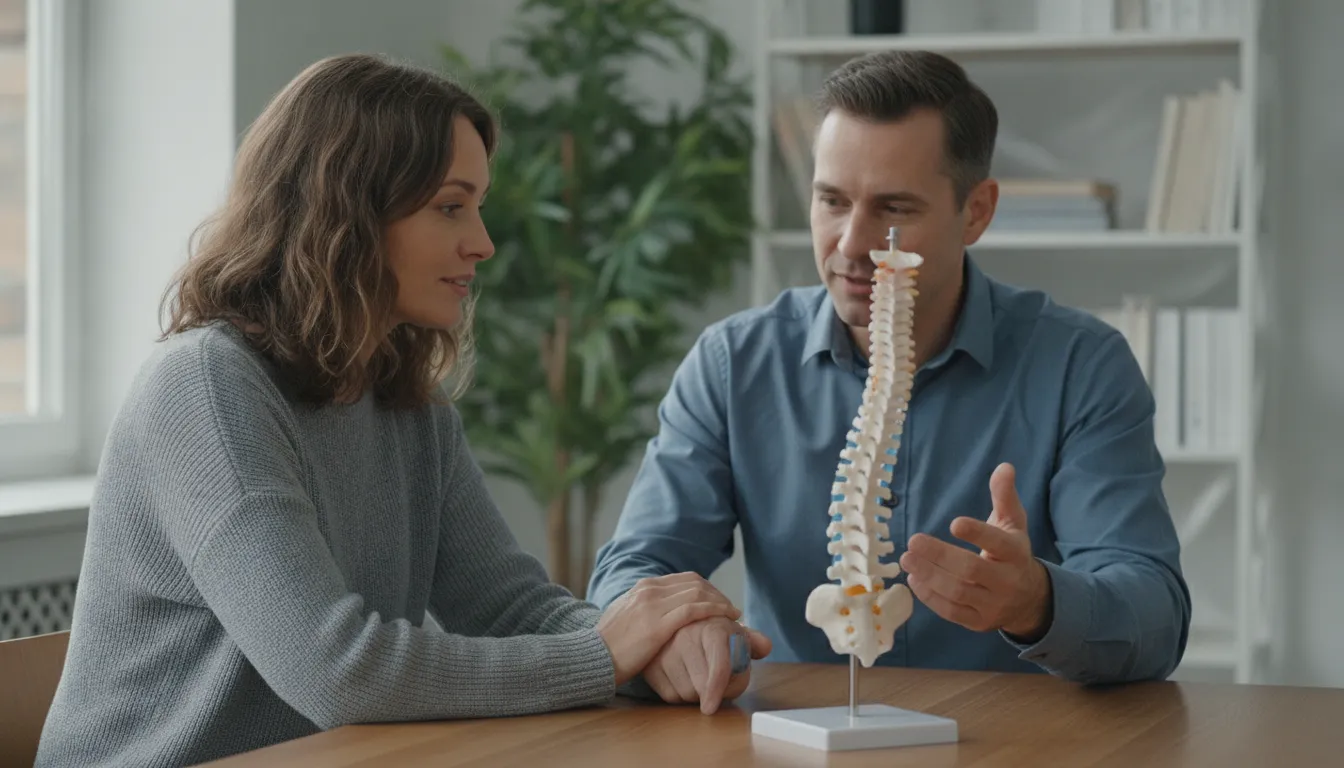
A specialist can connect symptoms, examination findings, and imaging during an evaluation.
- Review your symptom history.
Be prepared to describe where you feel pain, numbness, tingling, heaviness, or weakness, when symptoms began, and what makes them better or worse. Mention whether walking, standing, sitting, or bending changes your symptoms. Your provider may also ask about prior injuries, surgeries, medical conditions, medications, and treatments you have already tried.
- Discuss how symptoms affect function.
Explain the activities that have become difficult, such as walking a certain distance, standing to prepare a meal, sleeping, working, or participating in hobbies. Functional details help connect your symptoms with your goals. They also give the clinician a clearer picture than a pain rating by itself.
- Complete a movement and physical examination.
The examination may include observing how you walk, checking movement of the spine and limbs, and assessing strength, sensation, reflexes, or other signs. These findings can help the clinician understand whether the pattern is consistent with spinal nerve irritation or whether another condition may need consideration.
- Review existing imaging and decide whether more is needed.
Bring prior reports and, when possible, the image files from X-rays, MRI, or CT scans. Imaging can help identify the location of narrowing, but not every scan requires the same response. The clinician will decide whether current images answer the clinical question or whether another test is appropriate.
- Discuss the working assessment.
Your provider should explain what the history, examination, and imaging may show in understandable terms. Symptoms that resemble spinal stenosis can have other causes, so a careful evaluation is important. You can ask what supports the assessment, what remains uncertain, and whether additional evaluation is recommended.
- Set goals and compare options.
Talk about practical goals, such as walking more comfortably or returning to a valued activity. Ask about the expected purpose of each option, potential risks, alternatives, and what may happen if you wait. Treatment decisions depend on the individual, including the symptom pattern, examination, imaging, overall health, and preferences.
Before leaving, ask which symptoms should prompt a call and when follow-up is appropriate. Writing down your questions and bringing a current medication list can make the visit more productive. A qualified spinal stenosis specialist in Central Texas should welcome those questions and give you space to make an informed decision.
Schedule a Consultation to review your spinal stenosis concerns with ReleviiMed.
Which Minimally Invasive Treatments May Be Considered?
A treatment plan for spinal stenosis usually begins with the symptoms, examination findings, imaging, and goals discussed during an evaluation. Conservative care may be considered first or alongside a procedure. Physical therapy can help maintain strength and flexibility, while medications such as nonsteroidal anti-inflammatory drugs may help manage pain for some people. Your clinician can help determine whether these options are appropriate for you, including any medication risks or interactions.
When symptoms continue to affect walking, standing, sleep, or daily activities, a specialist may discuss an intervention. The purpose and limits of each option differ. Spinal stenosis can occur at different levels and may involve different structures. So an option that is reasonable for one anatomy or symptom pattern may not be appropriate for another. Injections, for example, may be used around spinal nerves to reduce inflammation and manage symptoms for some patients. But they do not make every cause of narrowing the same.
These categories are starting points for a conversation, not a recommendation for any individual. A spinal stenosis specialist in Central Texas can review your history and imaging, then explain why an option may or may not fit. Make room for questions about risks, alternatives, recovery, and expected follow-up. The decision should reflect both the clinical findings and what you hope to regain in daily life.
When Should You See a Specialist for Spinal Stenosis?
You do not have to wait until symptoms become overwhelming before discussing them with a healthcare professional. Consider an evaluation when back or neck symptoms begin limiting how far you can walk, how long you can stand, or your ability to complete ordinary activities. Leg pain or heaviness that appears with walking or standing and eases when sitting or bending forward can also be worth discussing. These patterns can have several possible causes, so they should not be treated as a diagnosis. Mayo Clinic describes common spinal stenosis symptoms, including pain, numbness, tingling, and weakness.
Persistent symptoms deserve attention when they interfere with sleep, work, exercise, driving, household tasks, or time with family. You may also want to seek specialist input if symptoms continue despite conservative care, return repeatedly, or gradually change. A spinal stenosis specialist can review your history, perform an examination, and determine whether imaging or additional evaluation is appropriate. Similar symptoms may come from conditions other than spinal stenosis, including problems affecting circulation, so a careful assessment matters.
Pay attention to changes in strength and function
Progressive weakness in an arm or leg is a reason to contact a healthcare professional promptly. Particularly when it is severe or makes walking, balance, gripping, or other basic movements more difficult. Increasing numbness, frequent falls, or a noticeable decline in coordination should also be communicated rather than ignored. Keep track of when symptoms occur, what activities bring them on, and whether sitting or changing position affects them. This information can help make the evaluation more useful.
Know when symptoms need urgent attention
Sudden severe symptoms need prompt medical attention. Seek urgent care or emergency evaluation for new or rapidly worsening severe weakness, major difficulty walking, or new loss of bowel or bladder control. Numbness in the area around the inner thighs, buttocks, or genitals, especially when it occurs with weakness or bladder or bowel changes, also warrants urgent evaluation. These warning signs do not confirm a particular condition, but delaying care could be unsafe. If you are unsure how serious a sudden change is, call your local emergency service or seek immediate medical guidance.
For symptoms that are persistent but not urgent, scheduling an appointment with a spinal stenosis care overview can provide a structured next step. Bring a list of current medications, prior imaging reports when available, and a brief description of how symptoms affect your daily life. The goal is not to assume a treatment beforehand. It is to understand the possible causes, discuss appropriate options, and make decisions based on your individual examination, risks, and preferences.
Finding Care Near Schertz, San Antonio, and Central Texas
Local care is not only about choosing the closest office. It is also about finding a practice whose clinical focus, communication style, and evaluation process fit your needs. ReleviiMed Spine and Wellness is a physician-owned interventional pain management practice with clinic locations in Schertz and San Antonio. Patients in surrounding communities, including Alamo Heights, Converse, and Boerne, may also consider ReleviiMed as an area served, rather than assuming those communities are clinic locations.
As you compare options, ask how the practice approaches the first evaluation. Will the clinician review your symptoms, movement limitations, prior treatment, and existing imaging? Can you discuss what you hope to do more comfortably, along with the possible risks, benefits, and alternatives of any treatment under consideration? A thorough conversation can help distinguish a general treatment recommendation from a plan based on your medical history.
What to bring to a local consultation
Gather a current medication list, imaging reports, and relevant records before your visit. If you have access to the actual imaging files, ask the office whether those should be brought or sent in advance. It can also help to note when symptoms began, what activities make them worse, whether walking or standing changes your symptoms, and which treatments you have already tried. These details give the clinician a clearer starting point, but they do not replace an examination.
Questions that help you assess local fit
Who will evaluate my condition, and what training or certifications are relevant to my care?
How will you determine whether my symptoms are related to spinal stenosis or another condition?
What treatment options may be appropriate for my findings, and what alternatives should I understand?
How can I contact the practice if I have questions about records or next steps?
Contact ReleviiMed to ask about the next step for your symptoms.
ReleviiMed describes its care as personalized, compassionate, and unhurried. You can learn about ReleviiMed, its physician-led approach, and Dr. Manuel Ybarra's verified board certifications in Anesthesiology and Pain Medicine. For questions about arranging an evaluation in Schertz or San Antonio, use the practice's Contact page. Whether a local specialist is appropriate for you depends on an individual clinical assessment.
Contact ReleviiMed to ask about the next step for your symptoms.
Frequently Asked Questions
What does a spinal stenosis specialist do?
A spinal stenosis specialist evaluates whether narrowing in the spine may be affecting nearby nerves. The visit commonly includes a symptom history, movement questions, a physical examination, and review of relevant imaging. The specialist can explain possible causes, treatment options, risks, and alternatives without assuming that one approach fits every patient. Mayo Clinic describes the diagnostic process.
How do I choose a spinal stenosis specialist in Central Texas?
Look for a physician whose training and scope match your concerns, who explains findings clearly, and who discusses both non-surgical and surgical referral options when appropriate. It is also reasonable to ask how the practice evaluates imaging, handles questions, and includes your goals in the plan. Local access in Schertz or San Antonio may make follow-up conversations more practical.
What are the common symptoms of spinal stenosis?
Possible symptoms include back or neck pain, numbness, tingling, or weakness in an arm or leg. Symptoms vary by the location and severity of narrowing, and similar complaints can have other causes. A symptom list alone cannot confirm spinal stenosis, so persistent or concerning changes should be discussed with a qualified clinician. Review common symptoms at Mayo Clinic.
Are there non-surgical treatments for spinal stenosis?
Depending on the evaluation, options may include activity or rehabilitation guidance, medications, targeted injections, or other minimally invasive procedures. Injections around spinal nerves may reduce inflammation and pain for some patients, but results and suitability differ. Ask what each option is intended to address, along with its risks, alternatives, and expected follow-up. Mayo Clinic outlines treatment considerations.
When should I see a doctor for spinal stenosis?
Arrange an evaluation when symptoms persist, worsen, or interfere with walking, work, sleep, or daily activities. Seek prompt medical attention for new or progressive severe weakness, loss of coordination, or changes in bowel or bladder control. These signs can require urgent assessment and should not be evaluated only through an online article.
Contact us to discuss your next step
If spinal stenosis symptoms are affecting your movement, comfort, or daily routine, an evaluation can help you understand possible causes and discuss options that fit your situation. ReleviiMed provides patient-focused care for people in Schertz, San Antonio, and nearby Central Texas communities. Contact us to discuss your concerns and learn what to expect from the next step.


